Exploring the Evolving Humanitarian Landscape: University of Copenhagen Students Visit A-PAD SL
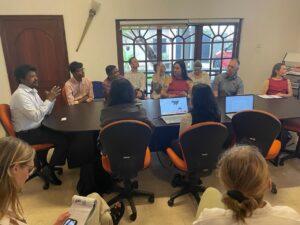
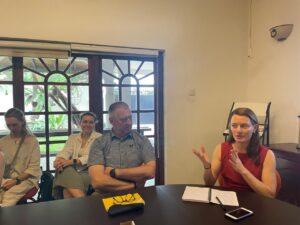
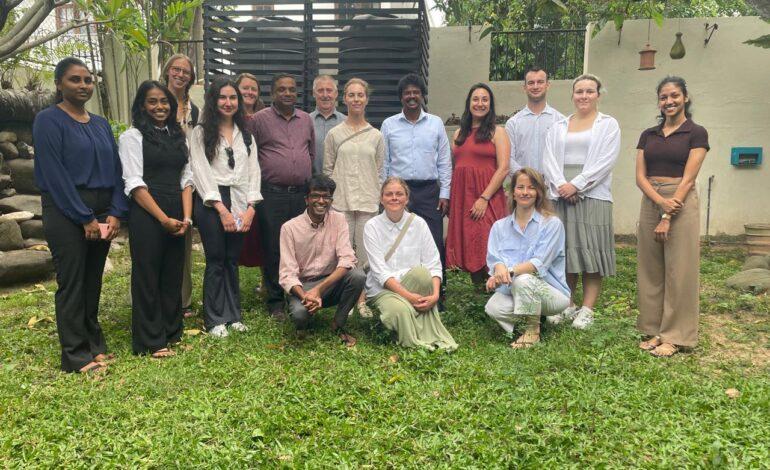
A team of Master’s students from the University of Copenhagen, Denmark visited the A-PAD Sri Lanka Colombo office as part of their three-week academic programme in Sri Lanka. The visit was facilitated by Prof. Nishara Fernando of Department of Sociology, University of Colombo, with the objective of providing students practical exposure to institutions working within the Disaster Risk Reduction (DRR) and Disaster Management (DM) framework in the country.
The session began with an introduction to A-PAD Sri Lanka by Country Director Mr. Firzan Hashim, who highlighted the organization’s role in strengthening collaboration among the private sector, civil society, and government in disaster preparedness and response. He cited A-PAD’s engagement during Cyclone Ditwah as an example of effective multi-sector coordination and outlined ongoing efforts to build national capacity through structured training and improved coordination toward meeting international Urban Search and Rescue standards.
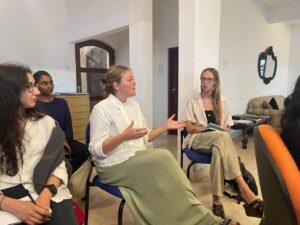
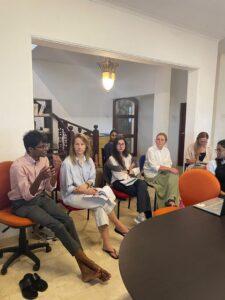
Following the presentation on A-PAD, participants engaged in an interactive discussion where students shared their perspectives and reflections, including insights gained from their field visit in Sri Lanka.
The team showed strong interest in understanding how the private sector views its role in the humanitarian space. A-PAD SL emphasized that engagement at senior corporate levels and a clear win-win approach are essential for meaningful participation. Once private sector actors recognize their value in humanitarian action, they become efficient and dependable partners, as demonstrated during Cyclone Ditwah. It was also noted that A-PAD platform helps guide businesses to respond in ways that align with national priorities and community needs.
Discussions further explored the growing corporatization of the humanitarian sector, highlighting the increasingly blurred line between private and humanitarian actors and the need for transparent and accountable partnership models. Participants also examined the challenge of balancing donor interests with community needs, underscoring strong collaboration and networking as key to maximizing limited resources.
In addressing coordination challenges during disasters, A-PAD stressed the importance of understanding response phases and reaffirmed that communities remain the first line of defence. Reflecting on lessons from past disasters, including the tsunami and subsequent cyclones, the discussion emphasized collective responsibility, good governance, enforcement of regulations, and continuous public education to break the recurring cycle of minimal preparedness.
The visit served as a meaningful platform for dialogue between academia and practitioners, reinforcing A-PAD Sri Lanka’s commitment to strengthening partnerships and advancing disaster resilience.